2nd Annual Ukraine Freedom Summit · London
On 8–10 September 2025, world leaders, defence innovators, investors, and Ukraine's frontline heroes gathered at IET Savoy Place — to forge the alliances that decide the war, rebuild an economy under fire, and put Ukraine's veterans on the world stage.
The set-pieces
The full addresses from Day 1 — free to watch.
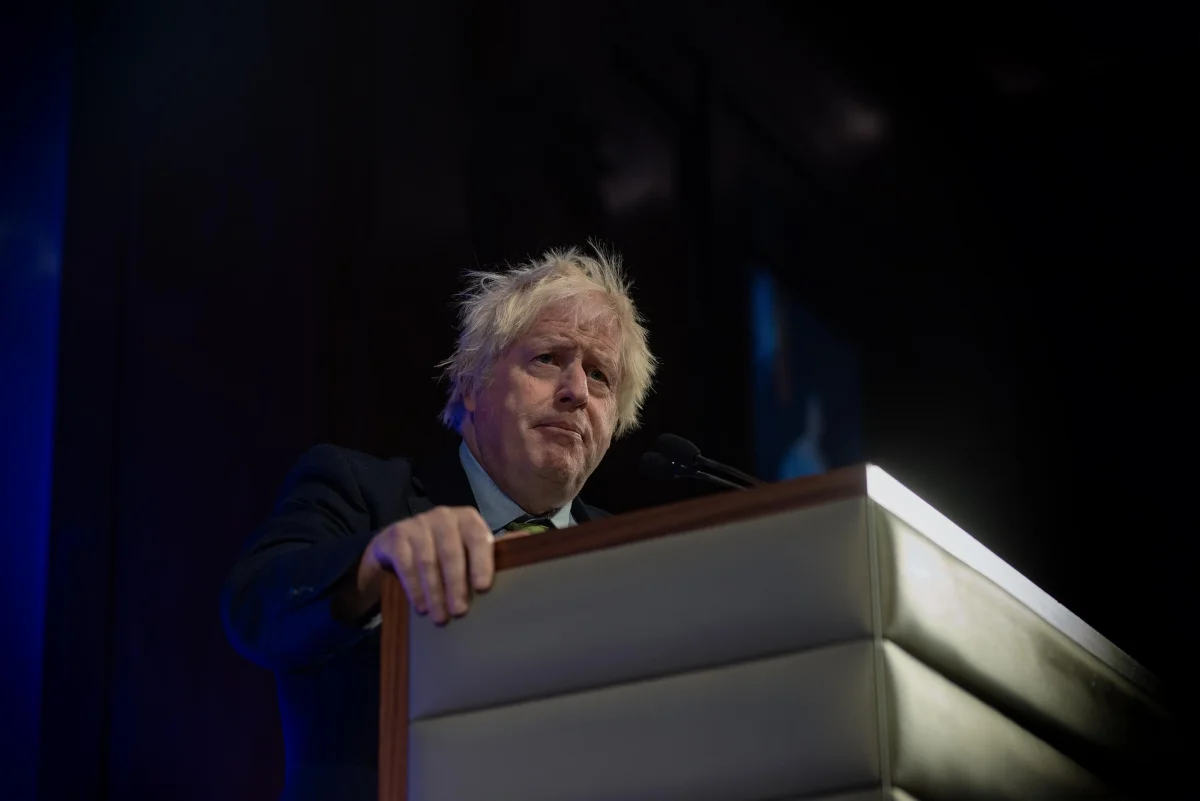
Boris Johnson · former UK Prime Minister
Johnson argued Putin has already lost and can only be moved by the united economic, military and political strength of the West — secondary sanctions, the release of frozen Russian assets, and the weapons and permissions Ukraine needs to win. He received the Borderlands "Freedom Fighter for Ukraine" award.
"It's no use trying to compromise on territory, any more than you can compromise with a crocodile that has its jaws wrapped around your leg."— Boris JohnsonFull address, takeaways & transcript →
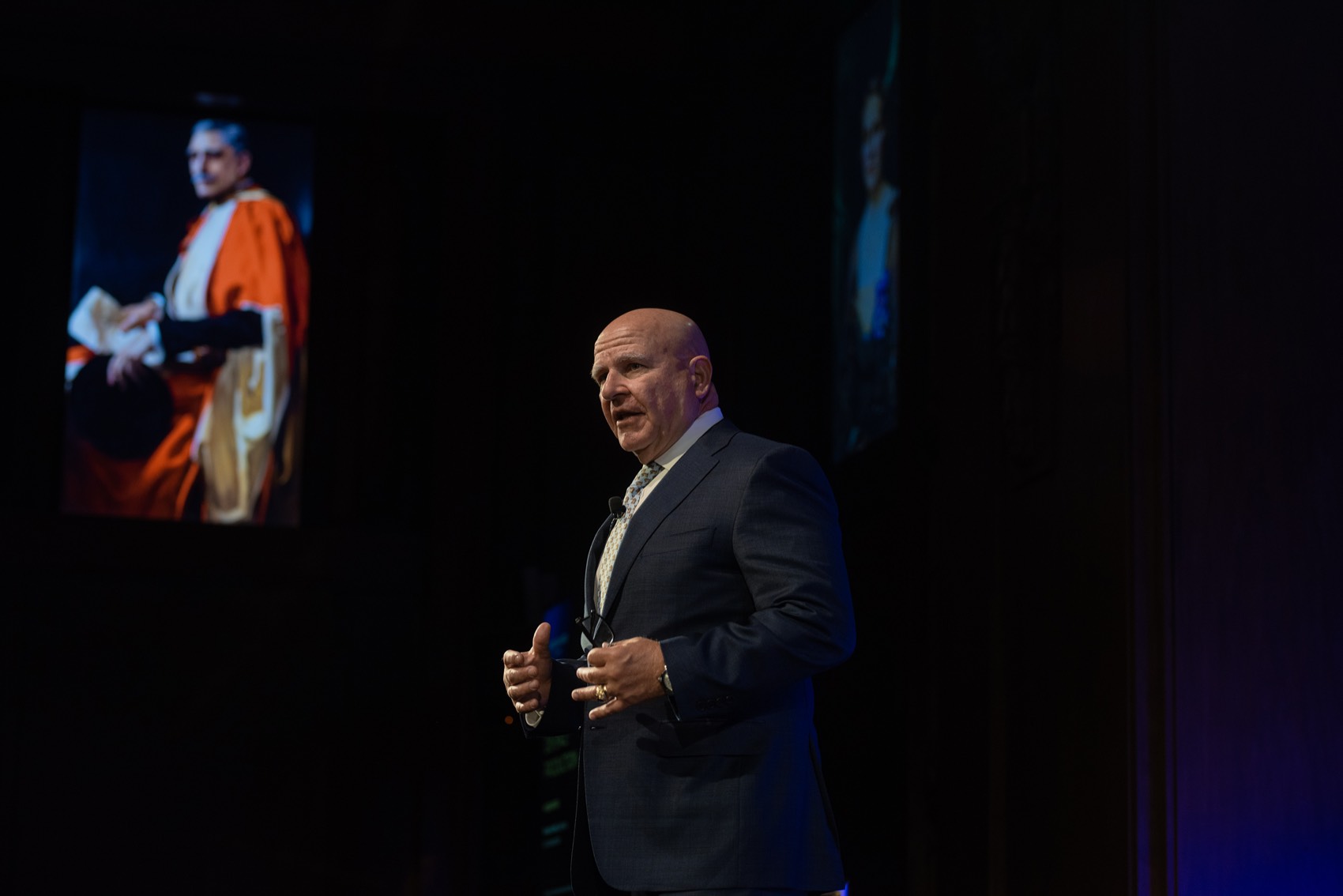
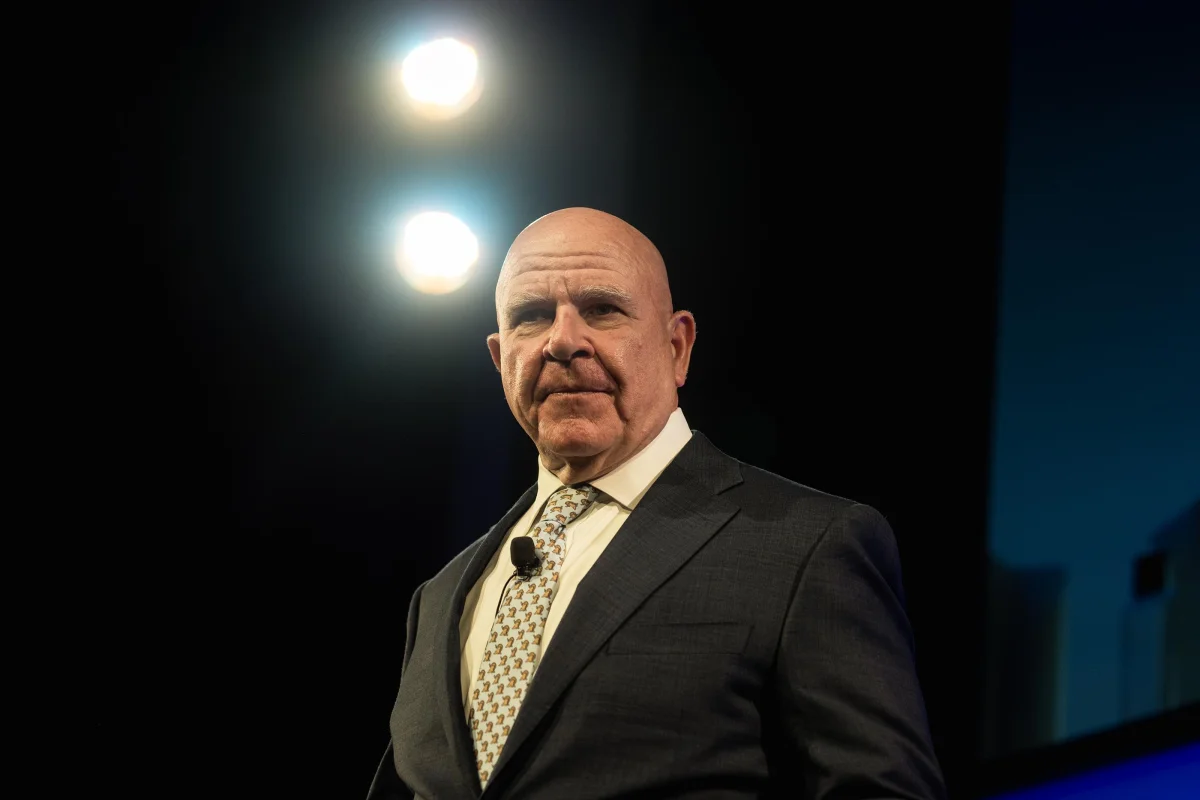
Gen. H.R. McMaster · 25th U.S. National Security Advisor
McMaster read the war for the lessons of the next one — an "axis of aggressors" provoked by perceived weakness, the transparency of the modern battlefield, and the enduring, human nature of war. In Q&A he addressed the US–Europe split, seized Russian assets, and secondary sanctions.
"Ukraine has been fighting a war for all of us, on this frontier between civilization and this barbarous alliance."— H.R. McMasterFull address, takeaways & transcript →
Day 1 · 8 September — Defence Innovation Forum
Seven panels plus special addresses by Gen. H.R. McMaster and Boris Johnson — where battlefield experience meets industry, and Ukraine becomes the world's leading laboratory of defence innovation.
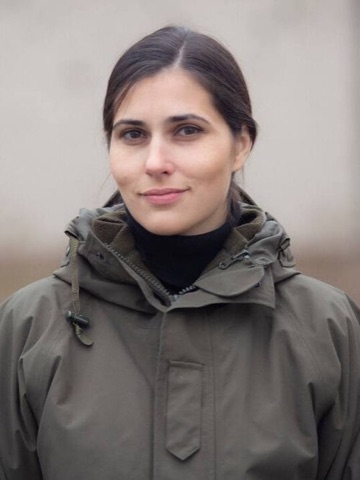
Halyna Yanchenko · MP of UkraineCCColin Campbell · Digi2L UK
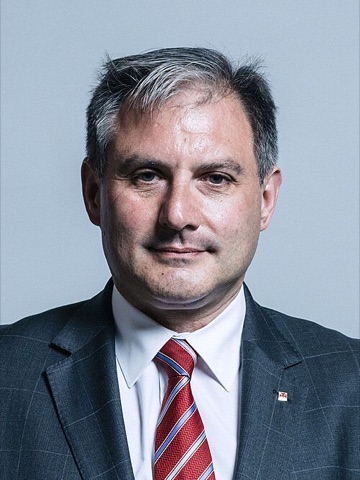
Jack Lopresti · International LegionHow European nations can partner with Ukraine's defence industry through joint production, "Build with Ukraine," and technology transfer. Speakers detailed Ukraine's Defense City special-economic-zone law, preferential 5% defence loans, and the shift since 2023 from Western reluctance toward proactive co-production — and the mismatch between wartime urgency and peacetime procurement.
"We don't want charity. We want the joint project. We want the joint technology. We want to work jointly."
— Sergiy Goncharov"We know that Putin's preparing for a wider war with NATO in the next 10 years. So we really do need to change the mindset."
— Jack Lopresti
Gen. H.R. McMasterSRSten Reimann · InfinitumNBGen. Sir Nick Borton★+ a serving Ukrainian special-operations officerStriking an enemy's infrastructure and will far behind the front — from the WWII Doolittle Raid to Ukraine's strikes on Russian refineries and Operation Spiderweb. The panel covered the psychological dimension of deep strikes, dependence on Chinese components, the cost/volume problem of long-range weapons, and how a future NATO fight would differ from Ukraine's war.
"Militaries that are not ready for the next war are those that study the lessons of the current or previous wars only superficially."
— H.R. McMaster"The fight starts the moment the first Russian soldier steps over the eastern-flank deterrence line."
— Gen. Sir Nick BortonUkraine's three-to-four-month innovation-to-frontline cycle, the Brave1 platform, decentralised brigade-level R&D, and the Delta battlefield-management system born from civil society in 2014. Panellists stressed crowdfunded frontline innovation and shifted the core ask from donations toward new joint financial instruments — an international procurement agency and a European defence-industry union.
"This is not the war of our defence forces. This is the war of our society. This is the war of our country."
— Maria Lemberg"In the UK it can take up to three years and £300,000 to license a product. In Ukraine you can do the same thing for about $15,000 and take one month."
— Kevin CravenThe barriers to scaling Ukraine's defence output: bankability and AML/KYC hurdles, a low approval rate on state-backed military loans, and export restrictions that deter investment. Panellists contrasted Ukraine's surplus production capacity — able to produce several times the national procurement budget — with Western financing that still treats the war as a business case rather than a military threat.
"The companies that produce cutting-edge weapons, and that have ingenious engineers, look very good on the battlefield but very bad on paper."
— Volodymyr Ponomarov"It's not yet considered in Europe that we have a military threat. We have to put all efforts into production, whatever money is needed."
— Vlad Belbas
Boris Johnson
Gen. H.R. McMasterSVSergey Vysotskiy · NAUDI
Michael Kofman · CarnegieThe flagship panel debated the definition of Ukrainian victory, Europe's slowness to rearm, and the future European security architecture. Johnson pressed for releasing ~$250bn of frozen Russian assets and a "coalition of the willing"; McMaster argued Putin will not stop until convinced he is losing; Kofman assessed a multinational division could deploy given the political will; Vysotskiy said Ukraine's industry has spare capacity and needs procurement financing, not just investment.
"I believe Ukraine should have the whole of its 1991 borders. That's what I think. That's victory."
— Boris Johnson"He won't stop until he is stopped, because he's driven by that obsession."
— H.R. McMaster"Many European armies would have been off the battlefield in the first weeks of this war — either out of men, munitions, or equipment."
— Michael KofmanRussia's hybrid war on Europe — sabotage, arson, assassination plots and proxy networks — and its growing use of cryptocurrency for sanctions evasion and political money laundering. Speakers proposed tightening electoral-donation law to shrink the "attack surface," deeper intelligence-sharing, and merging intelligence, cyber and special-forces capabilities.
"Russia does not have a military culture. What it does have is an intelligence culture. And the heart and soul of Russian intelligence is subversion."
— Paul Joyal"What we have to do, in IT terms, is reduce the attack surface — through the rather mundane means of updating our electoral legislation."
— Neil Barnett
Rob Lee · FPRI
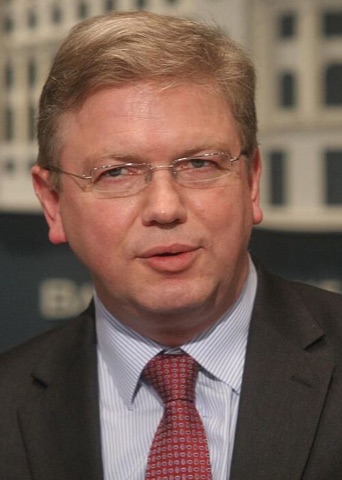
Štefan Füle · ex-Czech Ambassador to NATO★+ serving frontline drone operatorsFront-line drone operators and analysts described how UAVs now cause the great majority of casualties — extending kill zones up to ~30km, shifting logistics almost entirely to ground and bomber drones, and forcing infantry to hold positions for months. The panel detailed fibre-optic drones that defeat jamming, layered EW defences, and the UAV-versus-UAV fight becoming potentially decisive.
"The UAV-versus-UAV fight is becoming potentially decisive."
— Rob Lee"Drones are only the peak of the iceberg of a huge transformation. We have a common enemy, but we still do not have a common strategy."
— Štefan FüleIn pictures
Day 2 · 9 September — Economic Investment Forum
A keynote and six panels — a new Marshall Plan, frozen-asset reconstruction, war-forged startups, energy, and philanthropy as strategic infrastructure.
The keynote argued Ukraine must emerge from the war not as a "shield" but as the "sword" of Europe — rebuilt on new foundations rather than restoring Soviet-era industry. The speaker urged Western investors to plan reconstruction now across MilTech, high-tech, agriculture, energy and heavy industry, and named a strong army, education and health as the three pillars of the future state.
"Ukraine will never become a shield of Europe. You are the shield. We shall become the sword of Europe, because democracy should be weaponized."
— Keynote speaker"If you want to win the war, you have to be well-prepared for the war."
— Keynote speaker
Sir Tony BaldryICIlona Chmelova · Economic Security Council of UkraineSBStephanie Baker · BloombergHow Ukraine's economic resilience and the weakening of Russia's economy are two sides of the same security effort. Discussion centred on the unrealised potential of sanctions — especially untargeted Russian oil revenues and loopholes via China and India — the political paralysis around frozen Russian assets, and how to attract post-war investment through rule of law and public-private "match funding."
"Putin is out to destroy Ukraine, not just militarily but economically."
— Stephanie Baker"Building a strong Ukrainian economy is impossible without making the Russian economy weaker."
— Ilona ChmelovaHow to fund Ukraine now and finance a reconstruction estimated above $500bn–$1tn. Ash pressed the case for seizing the ~$330bn of immobilised Russian central-bank assets and a Ukrainian sovereign wealth fund; Gorbatiouk detailed how London's capital markets and governance reform could make Ukraine "an investment case"; Ritter stressed capital for SMEs; Kramer argued philanthropy must be a deliberate, strategic gap-filler.
"There's no recovery and reconstruction unless you win the war."
— Timothy Ash"We all agreed that Ukraine should not be a charity case, but an investment case."
— Katya GorbatioukPrivate investment into Ukraine's booming defence-tech and dual-use sector, where foreign capital is now actively seeking deals. Sulzhyk described a new generation of young founders and warned the wartime export ban and procurement dynamics will reshape which companies win after the war; Bateman drew lessons from Israel's and Europe's venture ecosystems; Jackson made the case for relocating manufacturing to Ukraine.
"Us investors, we're like penguins: we want someone else to go first."
— John Kim"It's the first time in Ukraine when there is an industry where people actually want to pour in money."
— Roman Sulzhyk
Sir Tony Baldry★+ a serving Ukrainian special-forces officerWith roughly 80% of energy infrastructure damaged, the panel debated how Ukraine should rebuild — affordable coal, gas and nuclear in the short term while positioning for renewables long term. Panellists stressed that Ukraine cannot "jump the queue" for scarce turbines and transformers and must start ordering equipment now, and debated resisting costly net-zero rules during recovery.
"Ukraine has got an amazing opportunity to build something new — the template for the entire world."
— Kasia Piquette"One of the war crimes is the persistent attacks on the energy infrastructure."
— Sir Tony BaldryHow wartime giving evolved from the 2022 donation surge through donor fatigue and back to renewed support. Kramer framed the pattern as a classic disaster-fundraising bell curve and argued philanthropy must earn a strategic "seat at the table" in reconstruction; Lemberg placed Ukrainian philanthropy in a centuries-long tradition of sustaining national identity. This session replaced the draft agriculture panel.
"Philanthropy in Ukraine is something that kept the Ukrainian national idea alive until the time of independence."
— Maria Lemberg"A javelin, a tank, a long-range missile in the hand of a Ukrainian soldier is the best defense for a Ukrainian journalist."
— Jakub Parusinski
Ivan Vasyunyk · former Deputy PM of UkraineJKJeffrey Kramer · Nova UkraineCPCatherine Porter · energy consultantReconstruction should mean "building forward best," not merely restoring what existed. Vasyunyk drew on Ukraine's Euro 2012 preparations to stress professional capacity, cultural infrastructure and national identity — and named bringing displaced families home as the hardest challenge; Porter covered energy-efficient modular housing; Kramer reframed infrastructure as "saving" and rebuilding community.
"It's not the government, it's not the authorities who win the war, but the people, the society."
— Ivan Vasyunyk"Infrastructure's not about building. It's about saving."
— Jeffrey KramerIn pictures
Day 3 · 10 September — Veterans Leadership Forum
A keynote and five panels — turning warriors into leaders, healing body and mind, and freedom after captivity. 20+ veterans on stage.
Prykhodko laid out Ukraine's overhauled veterans policy — rebuilt from a Soviet-era system around statutory strategic targets through 2030. He detailed programmes for physical rehabilitation, prosthetics, vision loss, mental health, digitised veteran status, EU-backed housing, education and business grants, and framed the ultimate goal as producing not just employed veterans but civilian leaders.
"Veterans are people who have taken responsibility for the country, so the country must give them a chance to be a leader in civilian life."
— Ruslan Prykhodko"If a civilian sees a homeless veteran begging for money, it won't motivate civilians to join the army."
— Ruslan Prykhodko
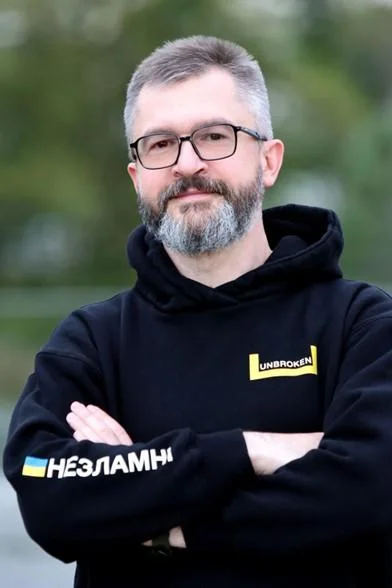
Oleksandr Kobzarev · Unbroken ↗OROmar Ritter · US combat veteran & author
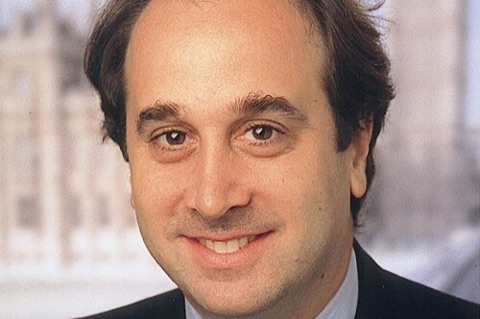
Brooks Newmark · former UK MPHow government policy and the private sector can help veterans move from service into leadership in business, politics and civil society. Kobzarev argued for many independent veteran communities rather than a single national body; Ritter drew on the US GI Bill, small-business loans and education; Newmark described hiring veterans through his company. Recurring themes: community, respect, and never leaving a returning veteran isolated.
"We have to make veterans not part of the problem, but part of the solution."
— Oleksandr Kobzarev"We should never leave a veteran alone with his own personal fight in his mind."
— Oleksandr Kobzarev
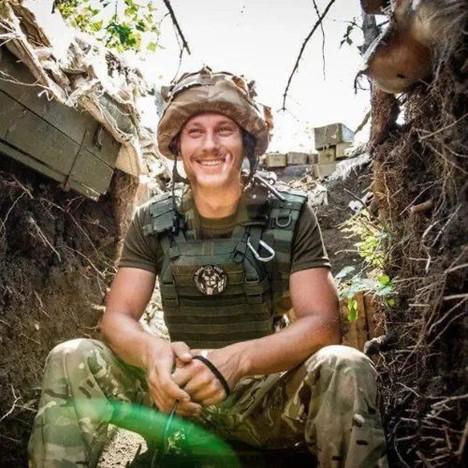
Yevhenii Malyk · Marine & ex-POW ↗
Maj. Gen. (Ret.) Vladyslav KlochkovRPRuslan Prykhodko · Dep. Min. of Veterans AffairsWhy documenting the war's history now — its places, battles and names — matters for Ukraine's future identity, defence and information war. Cook outlined the Ukraine Military History Center's projects and argued history should become Ukraine's "national brand"; Malyk stressed studying specific operations to surface unknown heroes; Klochkov linked historical memory to reclaiming Ukrainian identity from Russian narratives.
"I like to say history is a set of myths that inspire people to work together for a better future."
— Samuel Cook"A lot of the true heroes of Ukraine are still unknown, because we do not study every case properly."
— Yevhenii Malyk"Those who don't remember their history don't have a future."
— Vladyslav Klochkov
Oleksandr Kobzarev · Unbroken ↗JNJillian "Gilly" Norton · Supporting Wounded VeteransPhysical rehabilitation and prosthetics for combat casualties — insisting body and mind be treated together. Kobzarev traced Unbroken's growth from an ad-hoc 2022 response into a large Lviv-based ecosystem that has helped over 24,000 wounded, stressing speed, transparency and investing in people; Norton shared UK lessons on chronic-pain management, painkiller addiction, and the mistake of closing specialist centres.
"It's a big mistake to separate mental health and physical health, so we work with these together."
— Oleksandr Kobzarev"Invest in people, because walls and equipment don't work without doctors."
— Oleksandr Kobzarev
Maj. Gen. (Ret.) Vladyslav Klochkov · Center for Traumatic Stress ↗Reframing veteran mental-health support from treating disorders toward post-traumatic growth — emphasising mission, community and family. Joyal described the US peer-community model; Hartman outlined Ukrainian Action's ski- and sport-based programme; Norton discussed sports rehab and medical trials of psychedelic-assisted therapy; Klochkov presented the Ukraine Center for Traumatic Stress and the scale of the projected mental-health crisis.
"The principle of a warrior is that he has a mission — but after he leaves the service, he still needs a mission."
— Paul Joyal"PTSD is a great mystery to everybody. It doesn't take any notice of how educated you are, what rank you are."
— Gilly Norton
Yevhenii Malyk · Marine & ex-POW ↗
Roman Hrybov · 35th Marine Bde & ex-POW ↗GNGilly Norton · Supporting Wounded VeteransThe specialised needs of returning prisoners of war and their families. Two former POWs, Malyk and Hrybov, described the psychological ordeal of captivity — the fear of being wrongly listed as killed, and the torment of not knowing whether they would be exchanged. Norton shared UK experience with treatment-resistant trauma, and speakers stressed that veterans with lived experience are often best placed to help other former captives reintegrate.
"We all desire freedom, we all think we understand it, but we don't understand the price we have to pay for it."
— Yevhenii Malyk"Physical torture is actually much easier to bear."
— Roman HrybovIn pictures

The people behind the programme
Behind every panel were the veterans and ex-POWs who lived the war. Their testimony is why the Summit exists — and why it changes minds where speeches cannot.
The 3rd Ukraine Freedom Summit comes to Dallas, 16–19 March 2027. Same mission, bigger stage — and you're invited.